

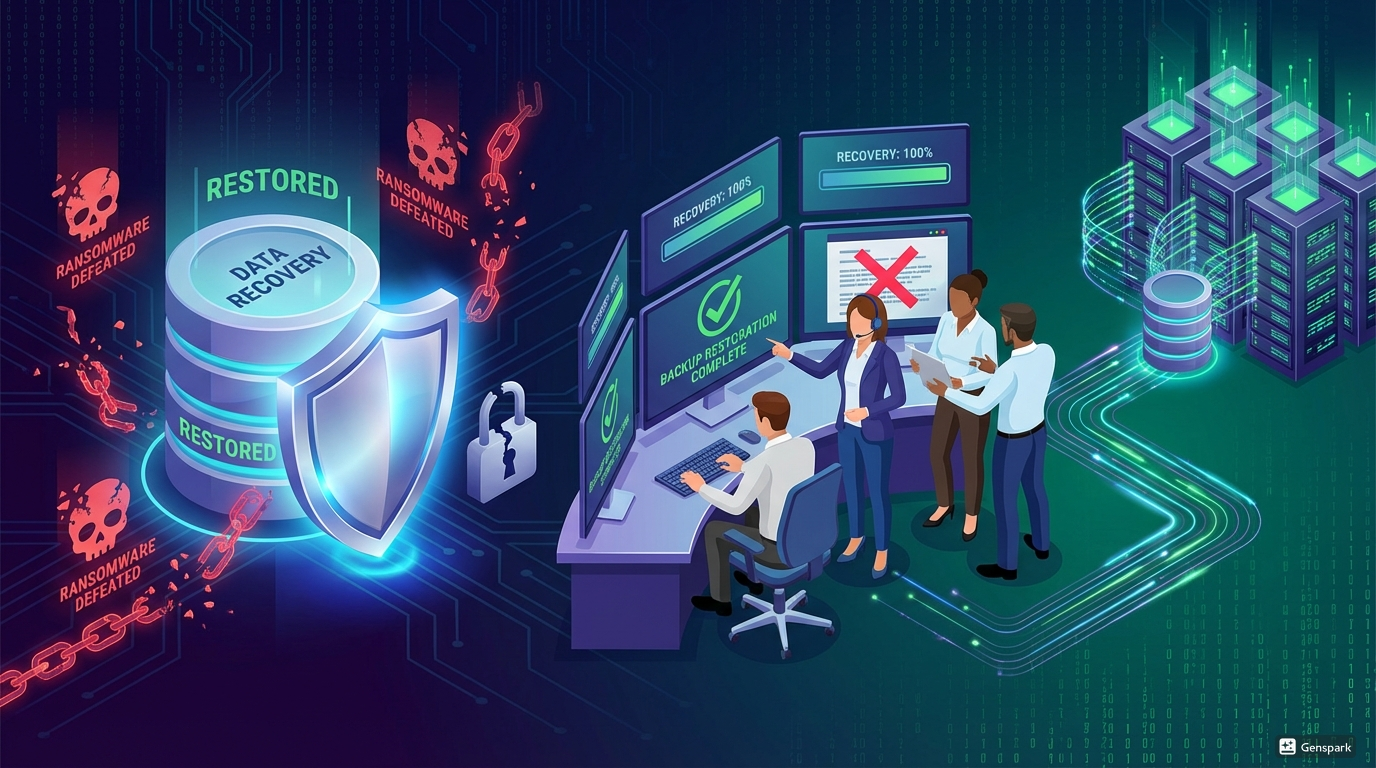
Introduction: Why Database Ransomware Incidents Are Different
Ransomware Complete Recovery for Databases: How Organizations Restore Data Without Paying the Ransom
TL;DR
- Ransomware recovery is not the same as decryption
- Databases are often recoverable even when fully encrypted
- Paying the ransom does not guarantee clean restoration
- Recovery success depends on backup isolation, replicas, and snapshots
- A structured ransomware complete recovery approach reduces downtime and data loss
Introduction: Why Database Ransomware Incidents Are Different
When ransomware hits a database, the impact is immediate and severe.
Unlike file servers, databases are live systems. They are constantly reading, writing, indexing, and logging transactions. When ransomware encrypts a database, it often does so while the engine is running, corrupting internal structures in addition to locking the data.
This is why many organizations discover that even after decryption, their database does not start, tables are missing, or records are inconsistent.
Ransomware complete recovery is not about “unlocking files”.
It is about restoring operational integrity.
This article focuses exclusively on how database ransomware incidents are actually recovered in real environments, and why recovery is often possible without paying attackers.
For reference, this recovery approach aligns with the enterprise ransomware handling workflows supported by AS Data Recovery.
What “Ransomware Complete Recovery” Really Means
Ransomware complete recovery is the process of restoring usable database operations after an encryption attack, without relying solely on attacker-provided decryption keys.
It may involve:
- Restoring from unaffected backups
- Recovering from replica lag
- Rebuilding databases from partial snapshots
- Extracting data from pre-encryption states
- Validating integrity before production deployment
Importantly, complete recovery does not always mean zero data loss.
It means restoring the database to a trusted, operational state.
Why Paying the Ransom Rarely Solves Database Problems
Many organizations assume that paying the ransom will immediately fix the issue. In database incidents, this assumption is often wrong.
Common outcomes after payment include:
- Decryption succeeds, but the database fails integrity checks
- System tables are corrupted beyond repair
- Transaction logs are missing or damaged
- Performance issues appear due to silent corruption
- Compliance risks remain due to unknown attacker modifications
Attackers do not test restored databases.
They only provide keys, not guarantees.
This is why recovery planning should never depend solely on decryption.
How Ransomware Typically Targets Databases
Understanding the attack pattern helps identify recovery paths.
Phase 1: Initial Access
Attackers enter through phishing, exposed services, or compromised credentials.
Phase 2: Internal Reconnaissance
They locate:
- Database servers
- Backup systems
- Replication targets
- Administrator credentials
Phase 3: Backup Neutralization
This phase determines recovery difficulty.
Attackers attempt to delete:
- Local backups
- Network backups
- Snapshot catalogs
- Transaction logs
Phase 4: Database Encryption
Encryption is applied to:
- Primary database files
- Log files
- Backup files found in accessible locations
This is where most damage occurs.
Where Recovery Opportunities Still Exist
Despite attacker efforts, recovery paths are frequently overlooked.
1. Isolated or Immutable Backups
Backups stored with immutability or separate credentials are often untouched.
2. Replication Lag
Database replicas may not be fully synchronized at the time of encryption. Even a few minutes of lag can preserve critical data.
3. Cloud Snapshots
Cloud providers often maintain snapshots outside the reach of on-premise credentials.
4. Archived Backups
Cold storage or offline backups are commonly missed during attacks.
5. Partial Encryption Failures
In some cases, not all database components are encrypted, allowing selective recovery.
These sources form the backbone of ransomware complete recovery.
The Correct Ransomware Recovery Workflow for Databases
Step 1: Containment and Preservation
- Isolate infected systems
- Do not reboot or run repair tools
- Preserve encrypted database files
Step 2: Recovery Source Discovery
- Audit all backup locations
- Check replicas and failover systems
- Inspect cloud snapshots and archives
Step 3: Controlled Restoration
- Restore to clean environments
- Avoid restoring directly to production
- Rebuild database services carefully
Step 4: Integrity Validation
- Run consistency checks
- Validate schema and relationships
- Confirm record completeness
Step 5: Production Reintegration
- Migrate verified databases
- Monitor for performance or data anomalies
This process prioritizes data trust, not speed alone.
Why DIY Ransomware Recovery Fails for Databases
Common mistakes include:
- Running repair tools on encrypted files
- Restoring compromised backups
- Trusting decrypted data without validation
- Reintroducing malware through infected restores
These errors frequently cause more damage than the ransomware itself.
Professional recovery avoids these pitfalls by separating:
- Encryption handling
- Data extraction
- Validation
- Deployment
When Ransomware Complete Recovery Requires Experts
Immediate escalation is recommended when:
- Backups are missing or encrypted
- Databases fail after decryption
- Replicas show inconsistencies
- Compliance or audit requirements exist
- Downtime costs are escalating
At this stage, recovery success depends on precision and experience, not experimentation.
Reducing Risk After Recovery
Once operations are restored, prevention becomes critical.
Effective post-recovery measures include:
- Immutable backups
- Backup isolation
- Regular restore testing
- Network segmentation
- Incident response playbooks
Organizations that implement these controls recover faster from future incidents.
Final Thoughts
Ransomware does not automatically mean permanent database loss.
In many incidents, data still exists in overlooked backups, replicas, or snapshots. The key is knowing where to look and what not to touch.
Ransomware complete recovery is a controlled process, not a single action. When handled correctly, it restores not just data, but confidence in the system.